The Hunger Project’s goal is to end world hunger. Our approach is different – we see people living in hunger as the solution, not the problem. We shift the mindsets of women and men so…
In the Majete 8 Epicentre in Malawi, Annes has upgraded her farming knowledge to lead her family out of hunger.
Annes Kampini married at nineteen through necessity, not because she wanted to. Her father had settled in South Africa, and her mother couldn’t provide for the family alone. Marriage looked like the only path to support.
It didn’t change much. Annes and her husband put everything into farming, but without money for fertiliser, harvests stayed poor. Their harvest carried the household for two to three months of the year. For the rest, Annes turned to piece work to keep food on the table.
In 2024, The Hunger Project introduced the Chimwemwe Village Economic and Social Association (VESA) group to her community, and Annes joined. Through VESA, Annes built new skills: preparing nutritious meals from locally available food, diversifying crops, using organic manure, and managing livestock.
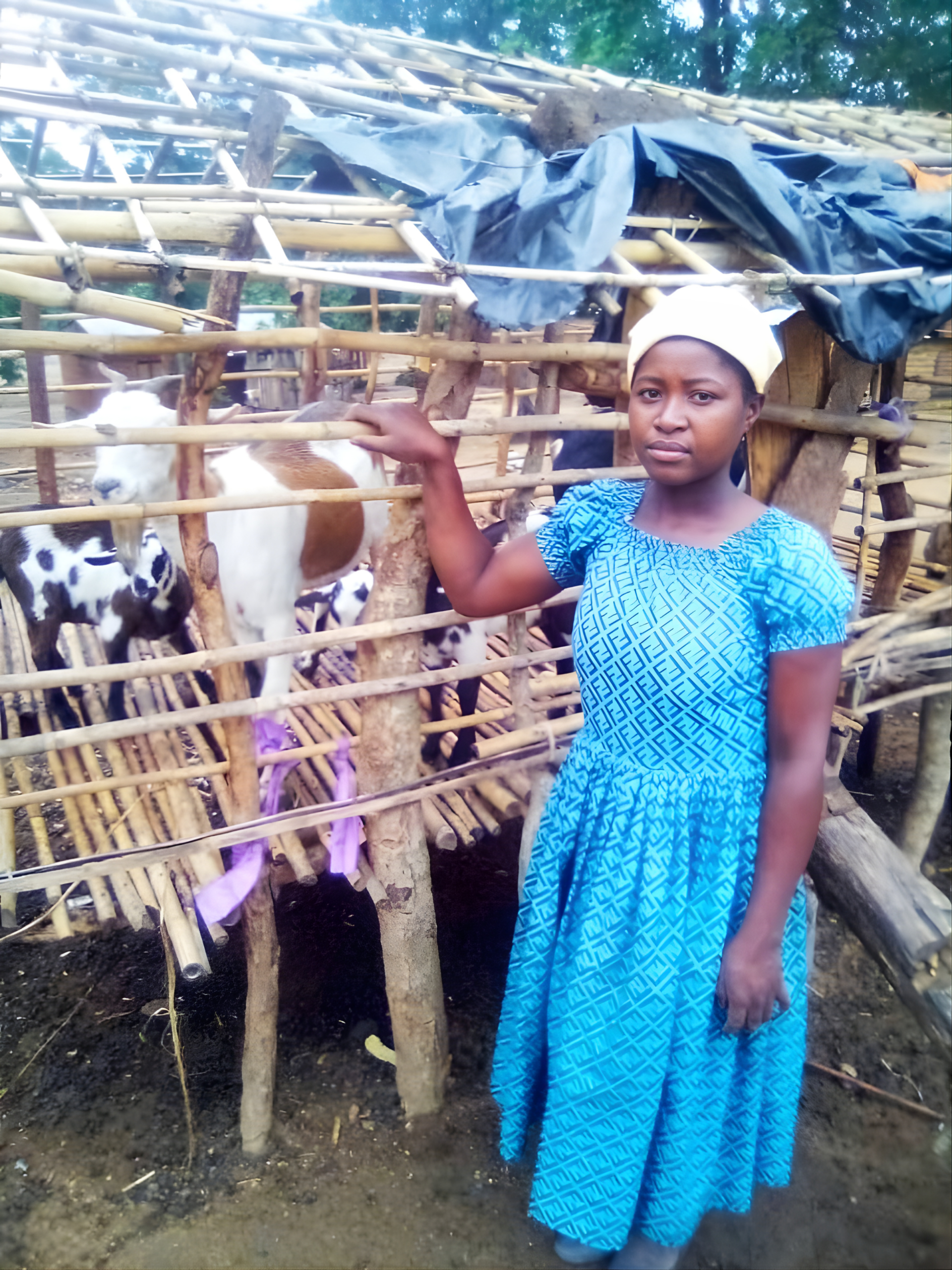
Annes was the first in her VESA group to receive five goats through The Hunger Project’s goat pass-on program, committing to pass on the same number of kids to the next family once her goats give birth.
The goats have already changed what’s possible on her land. Annes now collects milk and manure from them, and that manure has powered a shift to irrigation farming – freeing her from relying on rain alone and opening up winter planting. The results are showing: alongside maize, Annes has harvested cabbage and is now growing tomatoes.
“We are no longer relying on maize farming alone,” Annes says. “We recently harvested cabbage and now we have tomatoes in our field, all of which is made possible due to the advice we receive from VESA and the manure I collect from my goats.”
Annes’s vision is to use the proceeds from her harvests to meet her household’s food needs and support her children’s education. She’s now planning to expand her field further, working toward a home free of hunger and poverty for good.
We are no longer relying on maize farming alone. We recently harvested cabbage and now we have tomatoes in our field, all of which is made possible due to the advice we receive from VESA and the manure I collect from my goats
Make your
impact count
Food & Nutrition
-
1,460,629
children receiving weight or nutrition monitoring
-
342,000
adolescent girls receiving Iron and Folic Acid supplements
-
1,109,876
People trained in nutrition and food processing
Equality & Empowerment
-
2,229,114
people have participated in VCA workshops since 2008
-
1,193,664
people in HIV/AIDS and gender inequality workshops in Africa since 2008
-
600,991
women have participated in leadership training since 2008
Education & Digital Equality
-
222,389
adults have enrolled in adult literacy in Africa since 2002
-
61,231
people trained in Safe School for Girls workshops in Bangladesh
-
17,030
Animators trained in literacy and education in Africa since 2011
Water & Health
-
1,095,711
children vaccinated in Africa since 2002
-
1,250,491
people trained in water and hygiene globally since 2011
-
389,091
bed nets to prevent malaria distributed
Climate & Environment
-
181,370
people trained in climate adaptation workshops since 2008
-
943,088
people trained in food security since 2011
-
23,134
people trained in climate adaptation workshops in 2025