The Hunger Project’s goal is to end world hunger. Our approach is different – we see people living in hunger as the solution, not the problem. We shift the mindsets of women and men so…
Asedi claims her economic voice in rural Zambia.
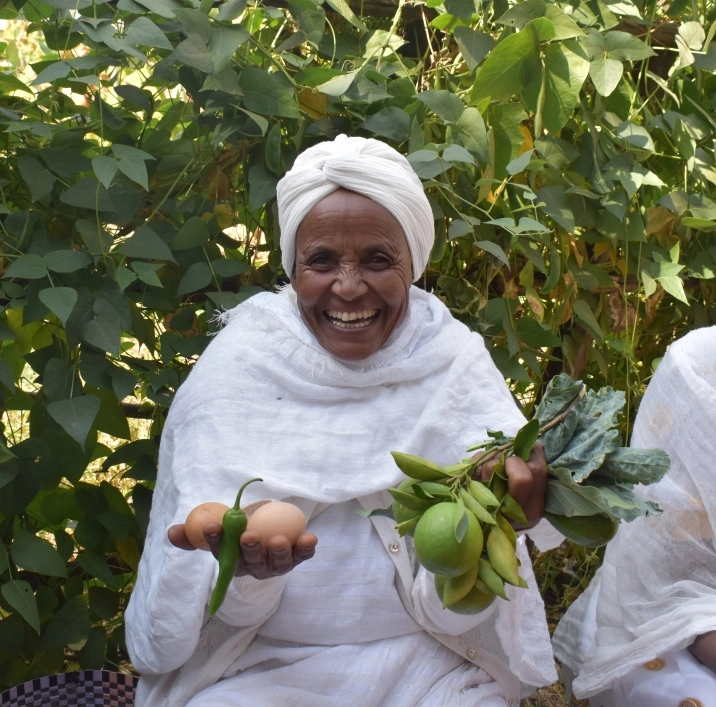
When school fees were due, Asedi Banda and her family survived on piecework. Everyday essentials—salt, relish, lotion—depended on her husband’s income, and any money she earned was quickly spent. “I used to keep money in the house,” she recalls. “We would do piecework to raise money for school fees.”
At 46, Asedi is a mother of eight in Kapasa Trading Centre, Chipangali District, with four children in school. Like many rural women, she carried the weight of feeding and caring for her family but had limited control over finances or household decisions.
Her life began to shift in 2021, when she joined a community savings group, and in 2024, she received structured financial training through the Global Alliance for Sustainable Nutrition project implemented by The Hunger Project. Through this group, Asedi learned to save consistently, access loans, and plan ahead—turning survival strategies into genuine economic agency.
“Sometimes I didn’t know I could invest my money by saving. But now I know, and it’s really helping me,” she says. Today, she saves with a group of 33 women, sharing out K1,600–K2,000 twice a year, and borrows from the group instead of relying on unpredictable piecework.
The impact is visible at home: “Sometime back I waited for my husband to buy everything. Now, if there’s no salt or lotion, I can buy it myself.” She invests her savings in farming inputs, hires labor for her fields, and plans ahead for the agricultural season. Her contributions are shifting household dynamics: “Even men are appreciating because we are helping as females.”
Beyond her home, Asedi opened a small kantemba (kiosk), marking her transition from surviving crises to building opportunity. Collective savings are transforming her community—women are no longer hiding money, they are building capital together, making financial decisions, and strengthening one another.
Asedi’s story is one of empowerment, resilience, and economic rights. From piecework to planning. From waiting to deciding. From vulnerability to collective strength. She no longer waits—she decides.

Sometimes I didn’t know I could invest my money by saving. But now I know, and it’s really helping me...Even men are appreciating because we are helping as females
Make your
impact count
Food & Nutrition
-
1,444,713
children receiving weight or nutrition monitoring
-
342,000
adolescent girls receiving Iron and Folic Acid supplements
-
1,080,406
People trained in nutrition and food processing
Equality & Empowerment
-
2,194,666
people have participated in our Vision, Action and Commitment workshops across all of our Program Countries since 2008
-
1,189,000
People have participated in HIV/AIDS and gender inequality workshops in Africa since 2008
-
593,130
women have participated in our leadership training since 2008
Education & Digital Equality
-
222,057
adults have enrolled in adult literacy in Africa since 1999
-
61,106
people have been trained in Safe School for Girls workshops in Bangladesh
-
15,651
Animators (volunteer leaders) have been trained in literacy and education in Africa since 2011
Water & Health
-
1,085,246
children vaccinated in Africa since 1999
-
1,158,000
People trained in water and hygiene globally since 2011
-
209,619
Bed nets to prevent malaria distributed
Climate & Environment
-
158,676
People trained in climate adaptation workshops since 2008
-
692,645
people trained in food security since 2011
-
26,007
people trained in climate adaptation workshops in 2024