
The Hunger Project’s goal is to end world hunger. Our approach is different – we see people living in hunger as the solution, not the problem. We shift the mindsets of women and men so…
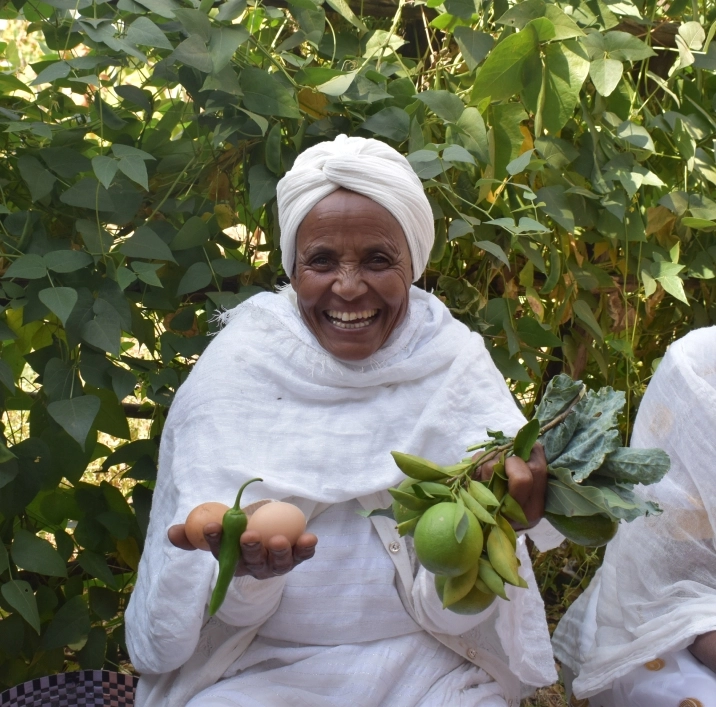
Christen uses his training to improve his crop yield.
Before the establishment of the Epicentre, Christen lived with chronic food insecurity, despite having access to fertile land and reliable rainfall. Like many others in his village, he was unable to turn these natural resources into food security or a sustainable income. He lacked the skills, agricultural inputs, and market access needed to fully benefit from the land he worked.
Christen’s transformation began after attending a VCA village-based workshop, followed by agricultural training that introduced him to improved farming practices. He began applying techniques such as Sasakawa technology ( a farming method that uses ridges spaced 75 cm apart, with planting stations every 25 cm, placing one seed per station), and the results were remarkable.
“Before The Hunger Project, there was so much hunger, even our farming methods were not good and we couldn’t harvest enough food. But The Hunger Project taught us good farming practices and our yields improved”, he says.
On the same plot of land where he previously produced less than 600 kg of maize per growing season, he now consistently harvests a minimum of 6,000 kg. With the income generated from this surplus, Christen has purchased livestock, pays school fees for his children, and has significantly improved his home.
Before The Hunger Project, there was so much hunger, even our farming methods were not good and we couldn't harvest enough food. But The Hunger Project taught us good farming practices and our yields improved
Make your
impact count
Food & Nutrition
-
1,460,629
children receiving weight or nutrition monitoring
-
342,000
adolescent girls receiving Iron and Folic Acid supplements
-
1,109,876
People trained in nutrition and food processing
Equality & Empowerment
-
2,229,114
people have participated in VCA workshops since 2008
-
1,193,664
people in HIV/AIDS and gender inequality workshops in Africa since 2008
-
600,991
women have participated in leadership training since 2008
Education & Digital Equality
-
222,389
adults have enrolled in adult literacy in Africa since 2002
-
61,231
people trained in Safe School for Girls workshops in Bangladesh
-
17,030
Animators trained in literacy and education in Africa since 2011
Water & Health
-
1,095,711
children vaccinated in Africa since 2002
-
1,250,491
people trained in water and hygiene globally since 2011
-
389,091
bed nets to prevent malaria distributed
Climate & Environment
-
181,370
people trained in climate adaptation workshops since 2008
-
943,088
people trained in food security since 2011
-
23,134
people trained in climate adaptation workshops in 2025