At 70 years old, Jacob is doing something no one in his community has done before.
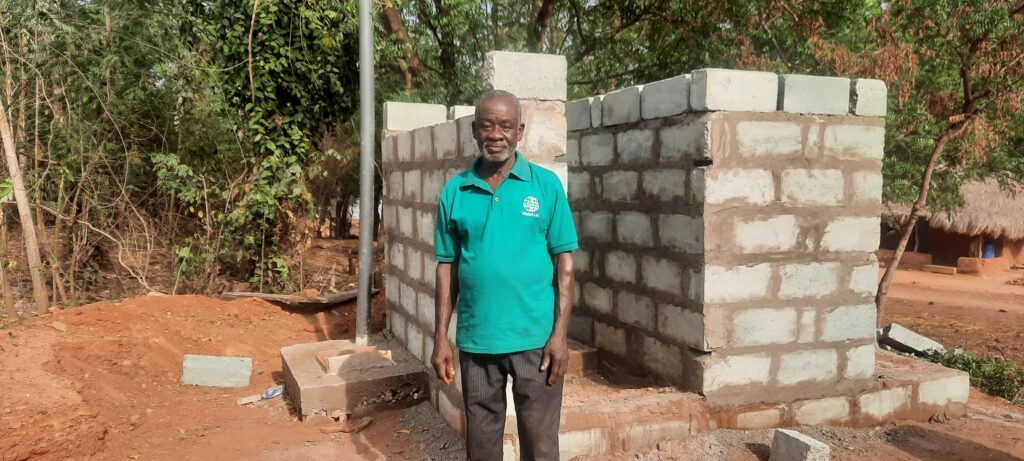
In Akode Epicentre in rural Ghana, he’s gathering cement, bricks, and timber to build the first household toilet his village has ever seen.
I want to be the first person to construct one so that others can follow my example,” Jacob says. “I am determined to be the pace setter.
A sanitation crisis that we can help solve
Across rural Africa, roughly three out of four people still lack access to safe, improved toilets. In Ghana alone, more than 70% of the population lives without proper sanitation facilities, and in northern regions, over half the community still practices open defecation.
These are they daily realities that shape health, dignity, and futures. When human waste isn’t safely contained, it seeps into wells and surface water. Diarrheal diseases follow, claiming 1.5 million children’s lives globally each year. In sub-Saharan Africa, waterborne illness remains one of the leading causes of death for children under five.
For girls, the absence of toilets means an education interrupted during menstruation, compromised safety, and limited privacy.
Changing habits and mindsets
Jacob remembers when open defecation was simply how things were done.
“We all practice open defecation since our childhood, so we see nothing wrong with it,” he explains. But when The Hunger Project partnered with Health Animators to bring sanitation training to Akode, everything shifted.” I got to know that open defecation causes disease and sickness which can easily be avoided just by changing our mind-set.”
Community-led transformation doesn’t happen simply by building more toilets.
Communities need to be partnered with, and equipped with knowledge, empowered to lead their own change. Jacob attended The Hunger Project’s trainings over the years, absorbing information about health risks, sanitation solutions, and the dignity every family deserves.
As an opinion leader in Akode, he made a choice to show leadership and to be the example.
Now, Jacob’s son is helping him construct the toilet and bathroom that will serve his family. But he’s already accomplished something greater: he’s sparked a shift in his community’s collective consciousness.
“Just by taking this step, others have realised that we need to stop spreading diseases around this community and be responsible,” Jacob reflects.
This is community-led development at its finest. No one imposed this change on Jacob or his neighbors. Instead, they were given knowledge, support, and the space to envision a healthier future—then trusted to build it themselves.
Flushing equals flourishing
Expanding toilet access in rural Africa is one of the most cost-effective public health interventions available. Improved sanitation directly correlates with reduced child mortality, better nutrition, and stronger educational outcomes. It builds climate-resilient communities where children can thrive.
Jacob’s toilet won’t solve Ghana’s sanitation crisis alone. But his leadership, and the ripple effect it creates, represents how sustainable change happens: one decision, one household, one community at a time.
“I am very grateful to THP for the bold effort in reshaping our mind-set on this issue,” Jacob says. On World Toilet Day, we share Jacob’s story of leadership with pride. Access to a toilet is about dignity, health, and the fundamental belief that every person deserves to live without preventable disease.