Africa

Tour an Epicentre

The Hunger Project’s Epicentre Strategy unites 10,000 to 15,000 people from a cluster of villages to create a dynamic centre, or “epicenter.” This is where villagers are inspired to act to meet their own basic needs. At the physical centre of the epicentre is a building that houses the community’s programs for health, education, food security and economic development and is a part of an integrated, holistic strategy.

Activity Hall

The activity hall is used for many gatherings such as graduation from primary school.

Ward

Demonstration Garden

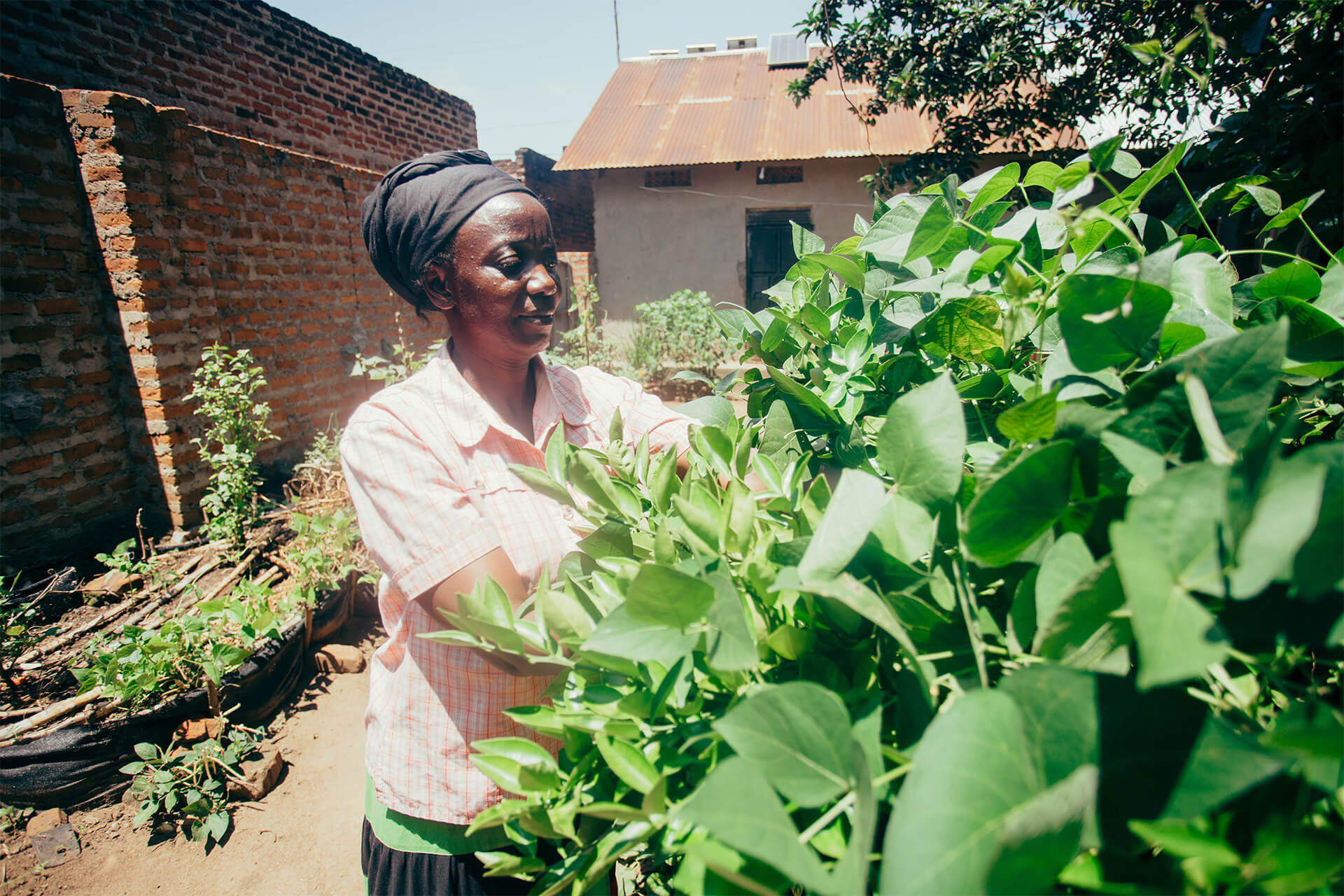
Each epicenter has a garden to train villagers how to best grow different, and more nutritious foods. We help train on how to make the soil better with crop rotation, organic fertilisation and off-season farming. We also show how to use drip irrigation.

Delivery Room

Pre-natal, Post-natal and Delivery services are provided. Maternal Mortality rates and Infant Mortality rates are the highest in Africa. Both drop dramatically with Pre- and postnatal counseling, and many epicentres have almost totally eliminated maternal deaths.

Pharmacy

Anti-malarial drugs which are provided free of charge to children under the age of five. Antiretroviral drugs to HIV positive sufferers, also provided free of charge.

Because the epicentre is a one-stop point of distribution for the government, they can more easily truck drugs that benefit a population of 10,000-20,000.

Clinic

Nurses give basic care, immunisation, and teach health and hygiene. They train birth attendants, and provide bed-nets. Before, there were no close-by health services. Sick people had a long walk to hospital. Therefore, until someone was really sick, it wasn’t worth the walk. When they were really sick, they couldn’t walk.

Reading Room

Adult and child literacy programs are conducted in local and national languages in this room. For instance, HIV/AIDS and Gender Inequality Workshop training is held here. This is the way we will teach people to stay healthy, encourage testing and provide positive reinforcement for those who are HIV positive.

Social Verandahs

Many community celebrations happen outside on the land and the Verandah. Here the ribbon is ready for the Inauguration celebration of the Mbale epicentre in Uganda.

Latrines

These are built as an example. We also have programs to support latrine constructions for households. The location of a pit and disposal of wastes are challenges that if overlooked can have serious health consequences such as Hepatitis A and Ecoli. This is a simple thing that helps saves lives.

Food Bank

Before we came, people couldn’t grow enough to feed their families, let alone have any left over to store! We loan better seed, fertiliser and train on the best way to farm. Now anyone can buy corn here doing away with long and sometimes dangerous trips to the market.

Bank

Loans are given here so people can start their own businesses or pay for other basic needs. In order to get a loan, their kids must come out of the field and get into school. They also need to start saving. We train villagers how to run businesses.

Nursery School

Children go to school from the age of three. This is often the first time anyone in the family received education. We make sure girls attend school, because too often education for girls is not considered a priority. Research shows that education for girls is key for breaking the cycle of poverty.

Preschools

Each Epicentre has a preschool. In addition to education, the school provides a nutritious meal of maize porridge to each child each day. Parents pay for their children to attend the preschool, and sending them to school is a prerequisite for getting a micro-finance loan.

Clean Water

Each epicenter has a clean water catchment system such as this tower.

Before we came, many villagers walked more than four hours to a dirty water hole that animals shared. Without clean water, babies die of something as simple as diarrhea and cholera.

THP trains villages to capture, purify and conserve water.

Rowlands Kaotcha, MA
Country Director for Malawi
Talks about the Epicentre Strategy
Meet the Country Directors
115

Epicentres

Country Epicentres
Benin
13
Burkina Faso
15
Ethiopia
6
Ghana
38
Malawi
8
Mozambique
3
Senegal
10
Uganda
11
"It's about the building,
but it's not about the building."
Australian Investor, Philip Comans

That's what one of investors, Philip, said when he visited the epicentre that he helped fund. What was he talking about?

In rural Africa, there is very little infrastructure. That means no hospitals, schools, or running water. Picture tiny dung huts set amongst thick jungle or dotting a vast desert. Each with their own over-used little plot of dirt on which to grow food. They could be hours away from a source of water—it might not even be clean.

So where does The Hunger Project come in?

The building—we call it an epicentre--houses medical services, a school, water, food security and a bank. It sits in the middle of 10-15 villages. And the villagers build it themselves. Brick by brick.

Investors help pay for the materials, the structural engineers and the process of mobilising the people. When Philip first started investing, he thought the cool thing was the building, but when he went to visit, he realised the most important result of his investment was how the people were empowered. The villagers had been through The Hunger Project's Vision, Commitment Action process and had been transformed from people waiting for a hand-out to confident, productive people who have created opportunities and could feed and care for their families.

Go on, take the tour.

more

In Africa, where endless hand-outs and dependency have become the norm, The Hunger Project has developed a model we call the Epicentre Strategy. Communities become self-reliant and are able to build a better life for their families and surrounding villages for generations to come.

An epicentre is a cluster of 10 to 15 villages within a 10 km radius, with a population of between 10,000-20,000 people. At the centre of the strategy is grassroots mobilisation. This mobilisation starts by bringing women into the conversation, taking the first steps toward equal participation. Once the women have been given a voice, we ask all the villagers to visualise a future free from hunger. They commit to realising their vision by planning action steps. Leaders begin to emerge and are trained as volunteer animators who inspire their fellow villagers to set priorities and take action.

Part of that action is building an epicentre—a community centre that houses the programs for health, education, food security, water and micro-banking. Once they’ve built the epicentre, local volunteer-initiated projects are taken up, including teaching others to read, to farm or to launch small businesses. People gain confidence when they succeed at their first self-reliant project and they begin to see themselves differently.

This strategy transforms a culture of dependency and resignation to one of responsibility and self-reliance. In the end, villagers in the epicentre run their own HIV/AIDS prevention workshops, maternal health clinics, food banks, micro-banks and schools. The Hunger Project supports this transformation for up to 9 years as the community becomes reliant, and then the organisation is able to exit, leaving a fully sustainable economy.

The Epicentre Strategy: Step by Step

There are four phases to the Epicentre Strategy.

  1. Mobilising villages for self-reliance and creating the vision of a future free from hunger (1- 2 years).
  2. Tipping Point after villages have been mobilised, they come together as one community to build the epicentre building. Construction of an epicentre building- (2nd or 3rd year).
  3. Progress on all fronts: successful operation of all basic services, combined with increased income-generating programs for the epicentre. (year 4 or 5).
  4. Self-reliance: the community continues to manage its own basic services based entirely on their own financial resources and decision-making abilities. It continues an upward spiral of economic and social progress (year 5-9).

Each of these phases requires a series of distinct activities-each of which produce specific results in people’s confidence, determination and effectiveness. The number of years in each phase varies by epicentre. Some villages progress faster than others.

Set-up

Based on Africa-wide experience, the average epicentre costs approximately US$650,000 over 5-9 years. Each epicentre affects an average of 10,000-20,000 people.

Detailed breakdown of an epicentre:
Annual requirements:
Training, capacity building and project support, each year for years 1 through 9.
Personnel: 2 staff for 3 epicentres
Vehicles bikes, cars (including drivers and gas)
VCA workshops and training of animators and leaders
Training in rural banking
HIV/AIDS and Gender Inequality Campaign
Food processing training
Income skills training
Literacy training

One-off requirements in year 2 or 3: The point at which villages come together in one mobilised community, resulting in the construction of an epicentre building:

  • Construction
  • Furnishings
  • Electric system (solar or other)
  • Credit funds
  • Water supply
  • Nurses’ quarters
  • Health centre supplies
  • Food processing equipment
  • Food bank


The Four Phases In Detail

Phase 1 - Mobilising villages and creating the vision

Activity

  • Meet with local government/district assembly to share The Hunger Project’s approach and seek their support. Vision, Commitment and Action Workshops (VCAW) at the district level, for local government officers and invited representatives from many villages.
  • One man and one woman from each village are invited to stay on for a second day of training.
  • VCAW at the community level, with several hundred residents. These are often held five or six times, to involve more people and have the concept of self-reliance take hold. The VCAW emphasizes the importance of literacy and the formation of local committees.
  • Training of volunteers called “animators” who promote self-reliant action.
  • Implementation of initial self-reliant village-level animator-initiated projects as homework for the VCAW, such as rebuilding schools and establishing income generating activities based completely on people’s own resources.
  • Special workshops for women are held, and women begin to form loan groups and select their leadership.
  • Forge relationships with local government. Local officials hear about concrete results of the animator-initiated projects. Functional literacy classes are held for women at the village level.

Outcomes

  • Establish the relationship, and create the initial glimpse of a new possibility.
  • People are awakened to a possibility of self-reliance. Leadership emerges.
  • Participants go back and talk with their villages-some are enthusiastic enough that they request workshops in their community.
  • Change the mindset from resignation to “we can end hunger in our villages”.
  • People create a broad vision of the end of hunger in their villages and being taking action to improve their lives.
  • Animators discover their ability to inspire others to set priorities and take action.
  • People gain confidence with the success of their first self-reliant projects.
  • People’s main motivation comes from the encouragement of the VCAW leader.
  • Women are mobilised, learn about the African Women Food Farmers Initiative, and contemplate increasing their economic power.
  • Government officials become more willing to interact with the community.
  • Women gain new access to information and economic participation.

Segue to phase 2

Creating epicentre committees and subcommittees responsible for creating and operating the epicentre facilities. Women are present on all committees, and women and men now start to work together.

Activity

  • Election of the epicentre committee by villagers at a community-wide general assembly: one man and one woman are chosen to represent two or three villages each.
  • Training of epicentre committee. An intensive three days orienting the committee on their leadership responsibilities. The committee elects its chairperson.
  • Subcommittees are established for health, education and each epicentre function. One committee member chairs each subcommittee and enlists others to join.
  • The women’s groups select members of an AWFFI loan committee to review and approve loan requests.

Outcomes

  • Villagers express their trust in individuals they respect, and their willingness to work together as a community.
  • Village rivalries are overcome.
  • The committee takes collective responsibility for the success of the epicentre.
  • The community begins to manage its own affairs.
  • Women begin to take charge of their economic future.

Phase 2 - The Tipping Point

Villages come together as one mobilised community, resulting in the construction of an epicentre building.

Activity

  • The epicentre committee negotiates with traditional leaders to have them donate at least five acres of land - two for the building and three for the community farm.
  • The local government certifies a survey of the land, and the Chief transfers clear title to The Hunger Project.
  • The Hunger Project begins to train subcommittees in their functions.
  • At any point, The Hunger Project staff can arrange a community-to-community exchange, where a new epicentre committee can learn from one that has already succeeded.
  • The Hunger Project hires a contractor to supervise construction of the building.
  • The epicentre committee mobilises voluntary labour to clear the land and begin laying the foundation.
  • This labour has a value of at least 20% the cost of the epicentre.
  • Contractors train people to make bricks.
  • Construction of the epicentre building, which houses a pre-school, training centre, food bank, library, health clinic and other facilities as needed.
  • People build nurses’ quarters adjacent to the epicentre building.
  • People build an epicentre latrine for both males and females, for safe sanitation.
  • The epicentre committee enlists the support of extension workers to introduce the best crops and start the community garden.
  • The epicentre community negotiates with government to provide support such as constructing an access road and the drilling of a bore hole.
  • AWFFI loan committee provides loans to women’s groups.
  • A smaller epicentre credit fund also provides loans to men.
  • Coordinating with the health committee, The Hunger Project delivers HIV/AIDS and Gender Inequality Workshops.

Outcomes

  • Traditional leaders become enthusiastic supporters of the epicentre strategy at this stage.
  • A critical step to ensure the community has a right to use the property.
  • Subcommittee members gain confidence and show greater leadership.
  • If needed, this step can further resolve rivalries and build greater enthusiasm and self-reliance.
  • Contractors train local people in new construction skills.
  • The epicentre committee begins leading the community.
  • People begin to learn to work together across village lines.
  • The epicentre becomes the basis for a future income generative activity in homebuilding.
  • The building becomes a symbol of partnership, self-reliance and the unity of the community. It’s an achievement almost unimaginable, and its construction is the tipping point.
  • The community has a trained nurse, provided by the government, who lives and works in the community.
  • The culture of using latrines is new, and starts to take hold.
  • Remote rural people, particularly women, learn techniques that will greatly increase their incomes.
  • Officials begin to see the credibility of people’s work and begin asking “what can I do?”. The epicentre committees gain negotiating strength.
  • Women grow more food, earn more money and, as a loan condition, keep their daughters in school.
  • Men now also have access to microcredit and learn to repay loans.
  • People redefine what it means to be a woman and man in the 21st century.

Segue to phase 3

At the end of phase two people have the confidence to negotiate directly with government for what they need.
The epicentre committee establishes all the key commitments from local government to provide teachers, nurses, books, pharmaceuticals, and farm extension agents.
The epicentre building is inaugurated at a public assembly with senior government leaders present.

People have the confidence to negotiate directly with local government. Local government feels a real stake in the success of the epicentre.
People celebrate their accomplishment, and have local government acknowledged for their partnership.

Phase 3 - Progress on all fronts

The full set of epicentre programs go into operation and the epicentre solidifies its partnership with local government.

Activity

  • The Epicentre Committee takes full responsibility, with advice and support from staff as needed, to manage the activities listed below.
  • Operate the health clinic-health records for children, immunisations, basic pharmaceuticals, classes and pre- and post-natal care for mothers; and continue the HIV/AIDS and Gender Inequality Workshops.
  • Train traditional birth attendants for each village.
  • Operate the pre-school-including provision of one home-grown nutritious meal per day.
  • Produce food for the food bank from the community garden.
  • Provide and maintain the food processing equipment.
  • Generate income for the epicentre through sales of food from the food bank, fees for food processing, machinery use and rental of the meeting hall.
  • Provide farm training in composting and introduce new seeds and methods at the community farm.
  • Provide training in new income-generating activities such as food processing, tailoring and tye-dying.
  • The AWFFI Bank successfully places and recovers loans, keeps records and mobilises savings.

Outcomes

  • Committee members gain mastery in their action, and the people gain confidence in their leadership.
  • Maternal mortality and child mortality drop significantly.
  • For the first time, reproductive health care is available at people’s doorsteps.
  • Mothers have more time for education and income-generating activities.
  • Farmers have more economic power- they don’t sell their crop when prices are low. The community is protected against famine.
  • Women’s drudgery is reduced.
  • People discover that they do have resources-savings-that they can use to develop additional income-generating opportunities.
  • People increase food production and make the transition from subsistence farmers to farming for the market.
  • Family incomes improve.
  • Women gain a strong voice in the community.

Segue to phase 4

AWFFI Bank gains official certification following 2+ years of good operations, training, and passing exams.
It now has greater access to capital and other financial services.
Women are elected to local office.

The epicentre now has the means for economic self-reliance.
Women’s confidence and respect spreads throughout the local society.

Phase 4 - Self-reliance

People are confident and able to rely on their own resources, leadership and capabilities to achieve further economic and social progress. The shift from dependency and resignation to self-reliance is a profound transformation. In the process, they have achieved dramatic and lasting improvements in the social and economic conditions of their lives.

While self-reliant epicentres receive no funding from The Hunger Project, they remain in the “family” and are an ongoing example of success. Action and progress continue-the first epicentre in Senegal reached this phase more than 6 years ago and continues to launch larger and larger community enterprises from its own capital.

Activity

  • Continue to maintain and operate the pre-school, health centre, adult education programs and all facilities.
  • Generate additional epicentre income through bank transactions.
  • Launch new income-generating ventures with investments from the bank.
  • Negotiate additional partnerships with government agencies and other NGOs for further training and resources.

Outcomes

  • Education, health and nutrition all continue to improve.
  • More and more funds to invest in the entrepreneurship of people.
  • The rural area becomes more economically vibrant. People migrate back from cities to the community.
Meet the Country Directors
Pascal Djohossou – Country Director, The Hunger Project,Benin

Since April 13, 2001 Pascal Djohossou has been the country director for The Hunger Project in Benin. He has a wealth of experience in grassroots mobilisation as well as in the formulation of rural development policy.

Wondimagegnehou A. Gubaie – Country Director, The Hunger Project, Ethiopia

Mr W.A. Gubaie joined The Hunger Project in Ethiopia as Country Director in 2004. Prior to that, he managed the Urban Development Support Service in the Prime Minister's Office.

Naana Agyemang-Mensah – Country Director, The Hunger Project, Ghana

Dr Naana Agyemang-Mensah joined The Hunger Project in Ghana as Country Director in January 2000. Prior to that, she worked with the Ghanaian National Council on Women and Development (NCWD).

Rowlands Kaotcha – Country Director, The Hunger Project, Malawi

Mr. Rowlands Kaotcha has served as Country Director of The Hunger Project in Malawi since 2004, after having served as Programme Officer since 2001.

Ofélia Santos Simão - Country Director, The Hunger Project, Mozambique

Ofélia Santos Simão became country director of The Hunger Project-Mozambique in 2007. Prior to that, she worked extensively in government agencies and with NGOs in Mozambique and has expertise in gender issues, community-based natural resource management and participatory monitoring and evaluation.

Madeleine Cisse – Country Director, The Hunger Project, Senegal

Mme. Madeleine Cisse has been the Country Director of The Hunger Project-Senegal since 2006. Prior to joining the Hunger Project, she was the Microfinance Support Administrator at Dynaentreprises, a USAID-funded project designed to promote decentralised financial systems and the growth of well-managed micro-enterprises.

Irene Wasike Muwanguzi – Country Director, The Hunger Project, Uganda

Irene Wasike Muwanguzi has been Country Director of The Hunger Project in Uganda since 2004, after serving as Project Officer and Coordinator of our African Woman Food Farmer Initiative (AWFFI) since 2001.